Quick Answer
A full wedding stationery suite includes a save the date, an invitation with an RSVP card and details card, and day-of pieces like programs, menus, escort cards, and table numbers, followed by thank-you cards after the wedding. Most Denton couples only need the invitation set and a few day-of pieces, not every item a bridal magazine lists.
A full wedding stationery suite on paper looks like a dozen separate pieces, but most Denton couples only need a handful of them. Here is what each piece actually does, which ones are essential, and which ones you can leave off your list entirely.
What Belongs in a Wedding Stationery Suite?
A complete suite breaks into three stages that follow your planning timeline rather than all landing at once.
Before the wedding: save the date, then the formal invitation with its RSVP card and a details card.
Day of the wedding: ceremony programs, table numbers, escort cards or place cards, and menus.
After the wedding: thank-you cards for gifts and for anyone who hosted a shower or helped the day run smoothly.
You do not need every piece in every stage. The next sections break down which ones earn a spot on your order and which ones you can skip without anyone noticing.
Do You Need a Save the Date for a Denton Wedding?
Not every couple does. A save the date earns its place when you have guests traveling from outside North Texas, a date that falls near a holiday weekend, or a venue popular enough that guests benefit from an early heads-up before other plans fill their calendar. A small, mostly local guest list or a short engagement can often skip it and go straight to the formal invitation, as long as that invitation still goes out with enough lead time. Our guide to when to send save the dates and invitations covers the full timeline either way.
Which Stationery Pieces Are Essential and Which Are Optional?
| Piece | Essential or optional | Why |
|---|---|---|
| Save the date | Optional | Useful for out-of-town guests or a date near a holiday; skippable for a small, local, or short-engagement wedding |
| Invitation | Essential | The only piece that formally asks guests to attend |
| RSVP card or online RSVP | Essential | Guests need a way to respond, paper or digital |
| Details card | Recommended | Keeps the invitation itself uncluttered |
| Ceremony program | Optional | Most useful for longer or unfamiliar ceremony formats, or a large wedding party |
| Menu card | Optional | Nice touch for a plated dinner, unnecessary for a buffet or food truck |
| Escort cards | Needed only with assigned tables | Tells guests which table to find |
| Place cards | Needed only with full assigned seating | Assigns an exact seat, not just a table |
| Table numbers | Essential if guests are seated at multiple tables | Pairs with your reception layout and seating chart |
| Thank-you cards | Essential | Expected after any gift or hosted event |
Do You Need an RSVP Card If You Have a Wedding Website?
Not necessarily. A wedding website built for guests to actually use can carry your entire RSVP process, which saves on printing and postage and makes tracking responses far easier than sorting through mailed cards. The tradeoff is that some guests, especially older relatives, are more likely to respond to a card they can mail back than a link they have to remember to click. Many Denton couples split the difference: a small line on the invitation directing guests to RSVP online, with a short list of guests who get a mail-back card instead.
What Information Should the Invitation vs the Details Card Carry?
Couples often cram everything onto one card, which is the fastest way to end up with a cluttered invitation. The invitation itself should carry only the essentials: who is hosting, both of your names, the date, and the ceremony time and location. Everything else, the reception address if it differs from the ceremony, dress code, parking or shuttle information, hotel block details, and your wedding website, belongs on a separate details card (sometimes called an information card). Keeping the two separate makes the invitation read cleanly and gives guests a single reference card for logistics instead of a paragraph buried under the ceremony details.
What Day-of Stationery Do You Actually Need?
Day-of pieces are the ones guests see and use during the wedding itself, and they are also the easiest to over-order.
Programs are worth printing if your ceremony has an unfamiliar format, a long wedding party, or readings and traditions guests might not recognize. A short, simple ceremony at the Historic Courthouse-on-the-Square rarely needs one.
Menus make sense for a plated dinner where guests are choosing between entrees, since the card doubles as a placeholder at each seat. Buffet, family-style, or food-truck receptions can skip menus entirely.
Escort cards are worth the printing if you are assigning tables, which is common at most Denton receptions once the guest count passes 75 or so. Place cards, which assign an exact seat rather than just a table, are only necessary if you are managing a detailed seating chart, usually for a formal plated dinner.
Table numbers are close to essential any time guests are seated at more than one or two tables, since they are the fastest way for people to find their spot without asking a staff member.
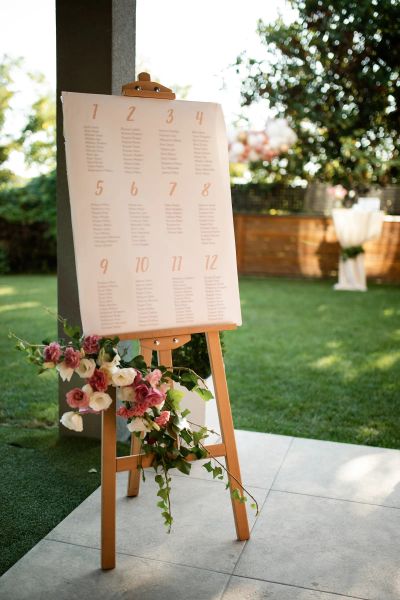
Beyond the printed pieces, many Denton receptions add a welcome sign near the entrance and a larger seating chart display instead of, or alongside, individual escort cards. Both are easy to order from the same print shop or designer handling your invitations, and neither is required. Treat them as a style choice you add if your budget and venue layout make sense for one, not a piece every wedding needs.
Need a Wedding Photographer?
📸 Featured Wedding Photographer: Jordan Blalock Photography

Once your paper suite is set, locking in the photographer who will document the day guests are holding those invitations for is the next step. With over 8 years of experience capturing authentic love stories across North Texas, Jordan Blalock Photography specializes in timeless, elegant photography that tells your unique story while making you feel comfortable and natural.
Specialties: Wedding photography, engagement sessions, natural light photography
Service Areas: Denton, Parker County, Dallas-Fort Worth metroplex
Contact: (940) 535-8993 | jordanblalockphotography@gmail.com
Do You Need Thank-You Cards, and When Should You Send Them?
Yes, thank-you cards are the one piece of the suite that is never optional. According to the Emily Post Institute, thank-you notes should go out within three months of receiving a gift, and ideally the same day for gifts that arrive before the wedding. Handwritten notes are still the expectation, not a form letter or a thank-you posted to your wedding website in place of a personal note.
How Much Does a Full Stationery Suite Cost?
Price ranges vary widely depending on printing method and how many pieces you order, but most Denton couples land somewhere between a few hundred dollars for a simple, digitally printed invitation set and well over a thousand for a fully custom suite with letterpress or foil printing, a details card, and matching day-of pieces. Skipping optional pieces like programs and menus is one of the easiest places to trim your paper budget without it showing. If you want help sourcing a custom design, our guide to finding a wedding calligrapher and stationer near Denton covers local and nearby options along with real cost ranges.
Should You DIY Any of Your Wedding Stationery?
Day-of pieces are the most DIY-friendly part of the suite, since a typo on a table number card is a lower-stakes mistake than one on a mailed invitation. Templates through a print shop or an online design tool can cover programs, menus, table numbers, and even a welcome sign affordably, and a home printer or a local shop can usually handle the printing once the design is set. Most couples still leave the invitation itself, including wording, envelope addressing, and final proofing, to a professional or at least a second set of eyes, since a mailed mistake is far harder to fix than a day-of one. For help getting the wording itself right, The Knot's invitation wording guide walks through how to list hosts, names, and details correctly.
What Should You Order First?
Lock in your save the date only after your venue and date are both confirmed, per our wedding planning timeline for Denton couples. From there, order your formal invitation suite three to four months out so you have time to proof it and still mail it on the standard six-to-eight-week window. Day-of pieces like programs, menus, and table numbers can wait until your final headcount and seating chart are locked, usually a few weeks before the wedding.
Whatever you skip, do not skip the thank-you cards. They are the one piece of the suite your guests will actually remember.
Frequently Asked Questions
Do you need a save the date if your engagement is short?
Not necessarily. Save the dates exist to give guests a head start on travel and time off, so a short engagement, a mostly local guest list, or a tight stationery budget are all reasons to skip straight to the formal invitation. If you do skip it, send your invitation on its normal six-to-eight-week timeline so guests still get enough notice.
Is a wedding website enough, or do you still need paper invitations?
Most Denton couples use both. A wedding website is a great place for details, directions, and digital RSVPs, but a physical invitation still reads as the official ask to most guests, especially older relatives. Think of the website as the details hub and the paper invitation as the formal piece that gets a response.
What is the difference between an invitation, a details card, and an RSVP card?
The invitation itself carries only the core facts, who is hosting, both your names, the date, and the ceremony location. A details card holds everything else, reception address, dress code, parking, and your wedding website. The RSVP card is a separate reply piece, either a mail-back card or a line directing guests to reply online.
Do escort cards and place cards mean the same thing?
No. An escort card tells a guest which table to sit at and is picked up from a display near the reception entrance. A place card sits at an individual seat and assigns the exact chair. You only need place cards if you are assigning full seating charts down to the seat, which is more common at plated dinners than buffets.
When should you order your wedding stationery suite?
Order save the dates as soon as your venue and date are locked in, typically six to eight months out. Order your formal invitation suite, including the RSVP and details cards, about three to four months before the wedding so you have buffer for proofing and a mailing window of six to eight weeks before the day.
Do you need matching stationery for a small or micro wedding?
No. A micro wedding can skip save the dates, escort cards, and a printed program entirely and still feel complete with just an invitation and a simple menu or table number. Matching every piece matters more for larger, more formal receptions where guests are moving between stations and need visual cues.
Denton Wedding Guide
Your trusted guide to wedding planning in Denton, Texas